Introduction
In today's world, where electronic devices are highly prevalent, the performance of batteries, as the power source of these devices, directly impacts their user experience and lifespan. The CR123A and CR2 batteries developed by HCB Battery have gained widespread attention in the market due to their exceptional performance. In this article, we will conduct a detailed comparison of the CR123A and CR2, analyzing the differences, advantages, and key purchasing points of these two batteries, offering an in-depth explanation across multiple critical dimensions.
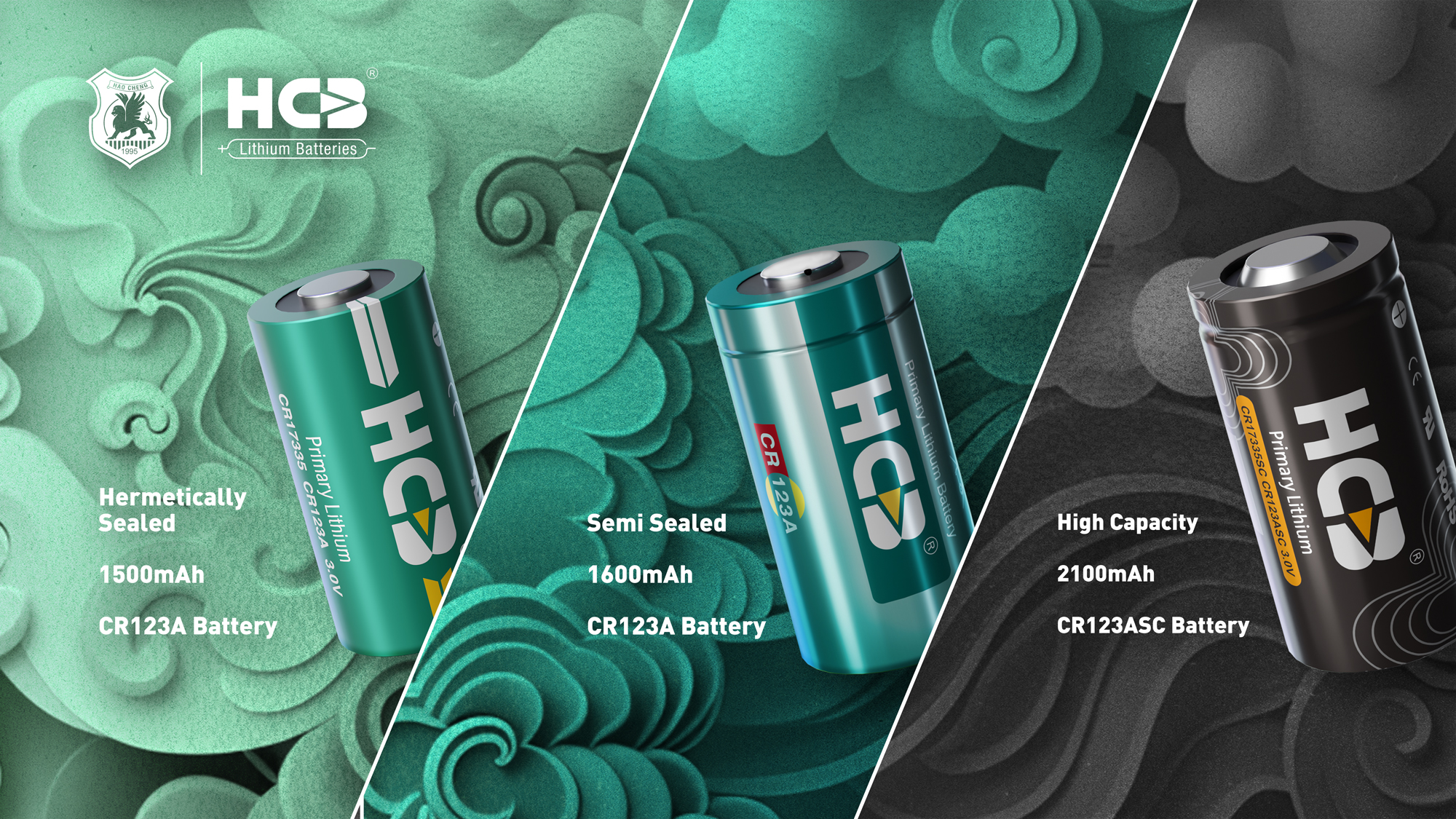
Performance of different models, basic technical specifications of the batteries, and scenario compatibility logic
CR123A Batteries
Hermetically Sealed 1500mAh CR123A Battery:
This model has a maximum dimension of ∅17.0×34.5mm, weighs 20g, with a nominal voltage of 3.0V and a rated capacity of 1500mAh. It uses a Li-MnO₂ chemical system and offers a maximum continuous discharge current of 1500mA and a maximum pulse discharge current of 3000mA at room temperature (23±2°C). Its operating temperature range spans from -40°C to +85°C, and its average annual self-discharge rate is less than 1% when stored at 25°C.
Due to its wide temperature range and low self-discharge rate, it is particularly suitable for security applications such as surveillance cameras and smoke detectors, providing stable power in harsh environments. It also offers reliable, long-term power support for smart metering devices like smart water meters and gas meters, reducing the hassle of frequent battery replacements.
Semi Sealed 1600mAh CR123A Battery:
With a nominal voltage of 3.0V, this model shares the same maximum dimensions of ∅17.0×34.5mm and weight of 20g, but the rated capacity increases to 1600mAh. Its operating temperature range is from -20°C to +70°C, with an average annual self-discharge rate of less than 1% when stored at 25°C. This version is ideal for indoor smart home devices such as smart locks, temperature and humidity sensors, and alarms. The extended battery life reduces the cost of battery replacements throughout the device's lifespan, ensuring stable power for everyday use.
High Capacity 2100mAh CR123ASC Battery:
This model also features a maximum dimension of ∅17.0×34.5mm, weighs 20g, with a nominal voltage of 3.0V and an impressive rated capacity of 2100mAh. At +25°C, it can discharge continuously at 1mA down to the cutoff voltage of 2.0V, achieving the rated capacity. It offers a maximum continuous current of 20mA and a maximum pulse discharge current of 50mA, with an operating temperature range from -40°C to +70°C and a self-discharge rate of less than 1% annually when stored at 25°C. This battery is designed for devices with high energy requirements and long-lasting, low-power needs, providing continuous power without maintenance for extended periods.
CR2 Batteries
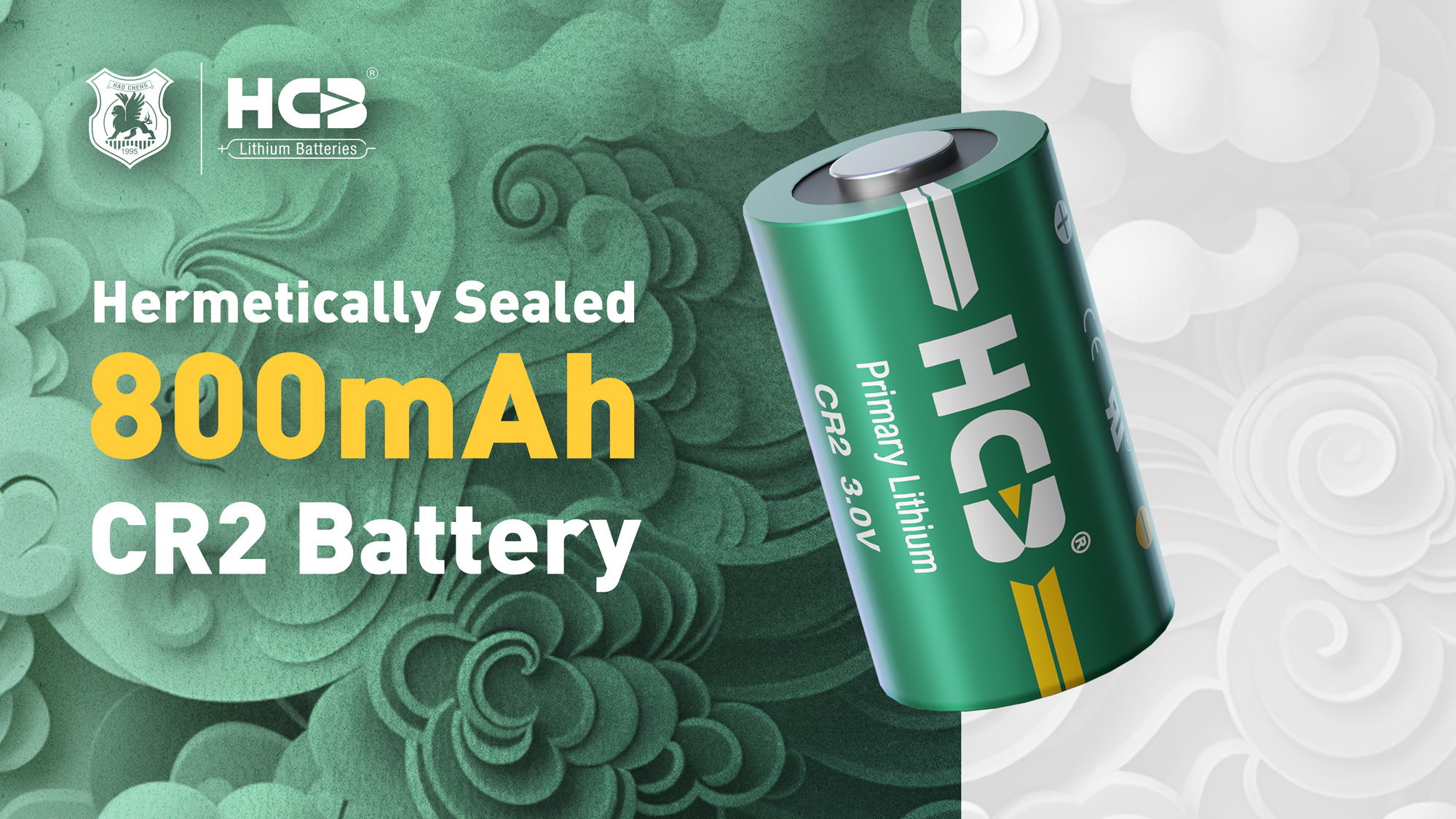
Hermetically Sealed 800mAh CR2 Battery:
With a standard voltage of 3.0V and a rated capacity of 800mAh, this model has a maximum dimension of ∅15.5×27.5mm and weighs 13g. Its operating temperature range spans from -40°C to +85°C. The battery incorporates advanced leakage prevention technology and high-quality, wear-resistant, high-temperature materials, with an annual self-discharge rate of less than 1%. It is commonly used in small portable electronic devices such as blood glucose meters and infrared detectors. The leakage protection technology effectively safeguards internal components, while the low self-discharge rate ensures that the battery remains usable even after long periods of inactivity.
Semi Sealed 1000mAh CR2 Battery:
With a standard voltage of 3.0V and a capacity of 1000mAh, this model has a maximum dimension of ∅15.6×27.0mm and weighs 11g. Its operating and storage temperature ranges are similar to the hermetically Sealed 800mAh version, offering excellent leakage protection and storage performance. This version is suitable for small electronic devices that require a moderate capacity, such as electronic blood pressure monitors, smart locks, and door/window sensors. The higher capacity provides longer usage time for these devices.
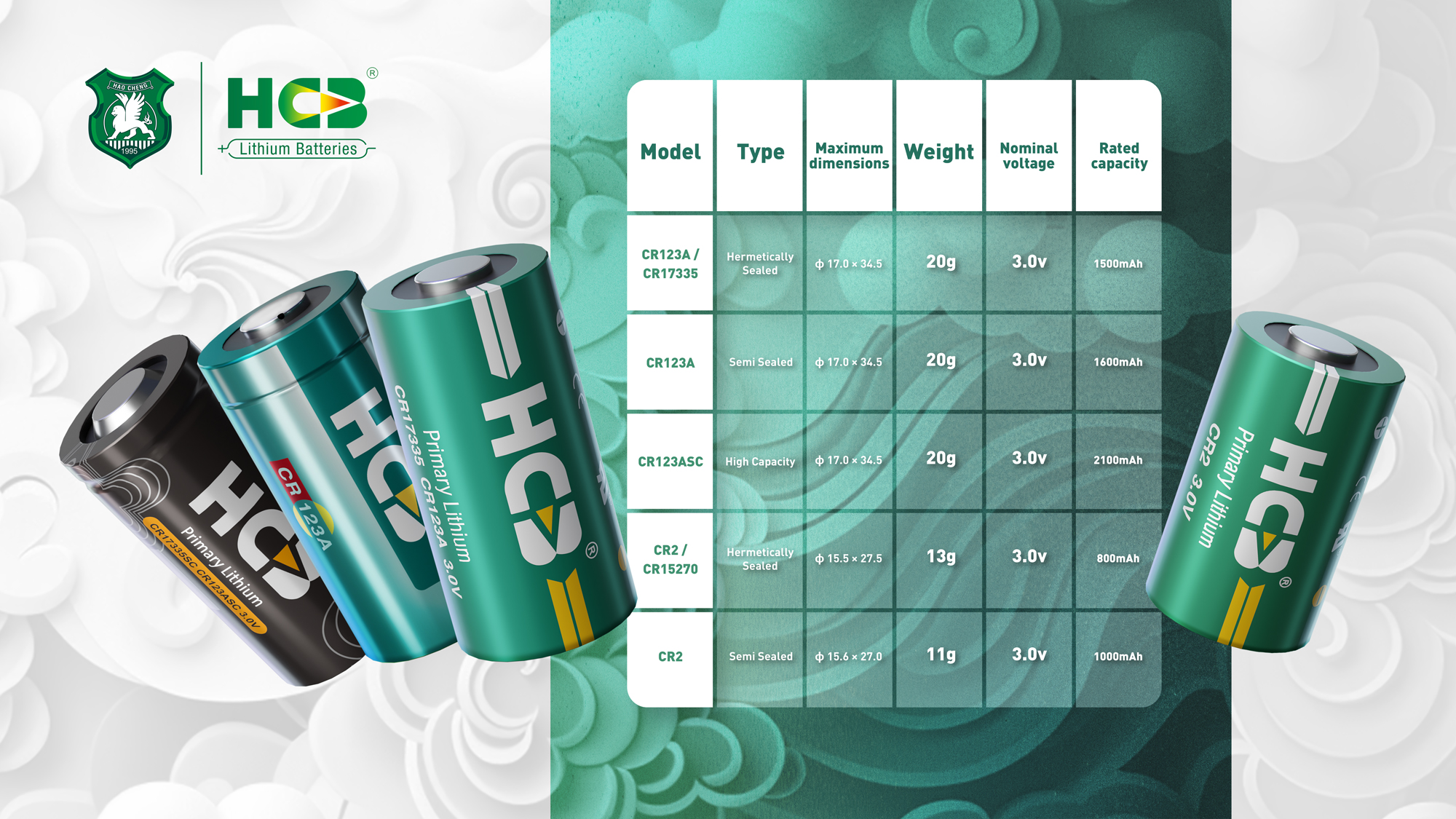
|
Model
|
Type
|
Maximum dimensions
|
Weight
|
Nominal voltage
|
Rated capacity
|
|
CR123A/CR17335
|
Hermetically sealed
|
∅17.0×34.5
|
20g
|
3.0v
|
1500mAh
|
|
CR123A
|
Semi sealed
|
∅17.0×34.5
|
20g
|
3.0v
|
1600mAh
|
|
CR123ASC
|
High capacity
|
∅17.0×34.5
|
20g
|
3.0v
|
2100mAh
|
|
CR2/CR15270
|
Hermetically sealed
|
∅15.5×27.5
|
13g
|
3.0v
|
800mAh
|
|
CR2
|
Semi sealed
|
∅15.6×27.0
|
11g
|
3.0v
|
1000mAh
|
Manufacturer's Technical Advantages and Quality Assurance
Deconstructing Technical Barriers
Process Innovation:
HCB Battery stands out in its battery manufacturing process. In the production of hermetically Sealed batteries, laser welding technology is applied, such as in the CR123A hermetically Sealed battery. This technique enables high-precision sealing, effectively preventing leakage and greatly enhancing the battery's safety and stability. Compared to traditional welding methods, laser welding creates more uniform and robust seams, capable of withstanding greater pressure and temperature fluctuations. In the winding process, precise control over tension and speed ensures that the internal electrode materials of the battery are tightly bonded, reducing internal gaps and increasing energy density. For example, the optimized winding process in the CR2 battery allows it to accommodate more active materials within the same volume, improving its capacity.
Material Innovation:
In terms of electrode materials, HCB Battery has improved Li-MnO₂ by using a special doping process to adjust the ratio of conductive agents such as carbon powder, graphite, and binders in the positive electrode materials. This breakthrough in formulation technology led to the successful development of a super-capacitive lithium manganese battery with proprietary intellectual property. This battery offers 40% higher capacity than similar-sized products and a service life of up to 12 years, breaking the monopoly of Japanese companies in this field.
Quality Control System
Strict Raw Material Testing:
HCB Battery conducts rigorous testing on every batch of raw materials. For example, when procuring electrode materials, tests are performed on several indicators such as purity, particle size distribution, and specific surface area. Only raw materials that meet the strict company standards are allowed into the production process, ensuring battery quality from the very beginning.
Real-time Monitoring During Production:
Advanced automated monitoring equipment is introduced during the production process. In the battery assembly stage, sensors monitor parameters such as electrode alignment and separator placement in real time. If any parameter deviates from the preset standard range, the equipment immediately triggers an alarm and halts production, ensuring that every battery produced meets quality requirements.
Comprehensive Testing of Finished Products:
Every battery that leaves the factory undergoes a thorough performance test, including open-circuit voltage, load voltage, internal resistance, capacity, and other performance assessments. For example, in the case of the CR123A battery, capacity tests simulate actual usage scenarios, using different discharge currents to ensure that the actual capacity matches the rated capacity. This strict testing process guarantees the reliability and quality of the products.
Similarities Between CR2 and CR123A
Similar chemical systems
Both CR2 and CR123A batteries use a Li-MnO₂ chemical system, which gives them the same nominal voltage of 3.0V. This shared voltage specification allows for a reduction in the number of batteries required to power electronic devices, simplifying the power design of the devices.
Same Operating Principle
The negative electrode releases electrons and lithium ions, with the electrons powering the external circuit. The lithium ions migrate to the positive electrode, where they combine with manganese dioxide and electrons to complete the reduction reaction. This entire process achieves stable discharge through the intercalation of lithium ions. Due to material and structural limitations, the reaction is irreversible, meaning the battery can only be used once and cannot be recharged.
Overlapping Application Scenarios
Due to their performance characteristics, both CR2 and CR123A batteries can provide stable power for small electronic devices, such as high-powered flashlights, to meet lighting needs. As a result, their application scenarios overlap to some extent.
Can CR2 and CR123A batteries be interchangeable?
Size Difference
The dimensions of a CR2 battery are ∅15.5×27.5 (hermetically Sealed) or ∅15.6×27.0 (semi-sealed), while the dimensions of a CR123A battery are ∅17.0×34.5. This significant size difference may result in an incompatibility with the same device, and forcing the battery compartment may damage it.
Differences in Capacity and Performance
Even if the device can accommodate both types of batteries, their capacity and performance differ. The capacity of the CR123A is generally higher than that of the CR2, and this variation in capacity can affect the device's runtime and performance.
Device Compatibility
Devices are optimized for specific battery models, with circuit design, voltage detection, and other features tailored to the characteristics of the chosen battery. Replacing the battery model may result in the device failing to recognize the battery or experiencing issues such as voltage instability or malfunction. Therefore, it is generally not recommended to interchange them.
Purchasing Recommendations, Usage Tips, and Safety Considerations
Purchasing Recommendations
Choose Based on Device Requirements:
For devices that require long battery life and performance in extreme environments, such as outdoor surveillance cameras, opt for high-capacity or hermetically Sealed CR123A models. For small indoor devices, such as electronic toys, CR2 may be more suitable.
Consider the Operating Environment:
For environments with large temperature fluctuations, choose CR123A models with a wide temperature range. For stable indoor environments, CR2 can be selected to reduce costs.
Focus on Battery Life and Self-Discharge Rate:
For devices with long standby times, choose batteries with a low self-discharge rate, such as certain models of CR123A.
Usage Precautions
Correct Installation:
Install the battery according to the device's instructions, ensuring the correct polarity. Incorrect installation may cause short circuits, damaging both the battery and the device.
Prevent Short Circuits:
Avoid contact between the battery's positive and negative terminals and metal objects. A short circuit can cause the battery to overheat or even catch fire.
Safety Considerations
Leakage Safety:
Although leakage prevention technology is employed, if leakage is detected, stop using the battery immediately and dispose of it properly. Avoid contact with the electrolyte to prevent skin and eye irritation.
No Disassembly or Heating:
The chemicals inside the battery are hazardous. Disassembling, heating, or throwing the battery into a fire may cause it to explode.
Child Safety:
Keep batteries out of the reach of children to prevent accidental ingestion. If a battery is swallowed, seek medical attention immediately.
By gaining a thorough understanding of HCB Battery's CR123A and CR2 batteries, you will be better equipped to make informed decisions when selecting and using batteries. This will help you meet your specific needs and ensure your electronic devices always perform at their best.
Frequently Asked Questions
1. What should be considered when storing HCB Battery's CR123A and CR2 batteries?
They should be stored in a dry, cool environment, with a storage temperature not exceeding 30°C and relative humidity not exceeding 75% RH. Avoid storing batteries with metal objects to prevent short circuits. Additionally, keep the batteries out of reach of children.
2. What happens if I accidentally mix CR2 and CR123A batteries?
It may cause the device to malfunction, such as failing to start or experiencing reduced performance. If the sizes do not match, it could also damage the battery compartment. Additionally, differing capacities and performances may lead to over-discharge or overheating of the battery, posing a safety risk.
3. What are the environmental characteristics of HCB Battery’s two batteries?
HCB Battery focuses on environmental protection during production and uses materials that comply with relevant environmental standards. However, used batteries should still be properly disposed of and not discarded. They should be taken to a qualified third-party company for recycling.
4. Can these two batteries be used in humid environments?
Although the batteries have some protective features, it is not recommended to use them in humid environments for extended periods. Humidity may affect the battery's sealing and performance, even leading to short circuits. If used in a humid environment, ensure that the device has adequate moisture protection.
5. Does HCB Battery provide after-sales support for its batteries?
Yes, HCB Battery offers after-sales support for its products. If there are any quality issues with the batteries you purchased, you can contact the manufacturer’s customer service and follow the relevant procedures for after-sales processing.<span style="font-size


